Showing posts with label remove. Show all posts

Thursday, June 29, 2023

PS Scripts - Remove Windows Inbox Apps


Here's a nice script to remove all or specific Windows Inbox Apps like Xbox App, Skype, Bing Weather, etc.

Wednesday, May 22, 2019

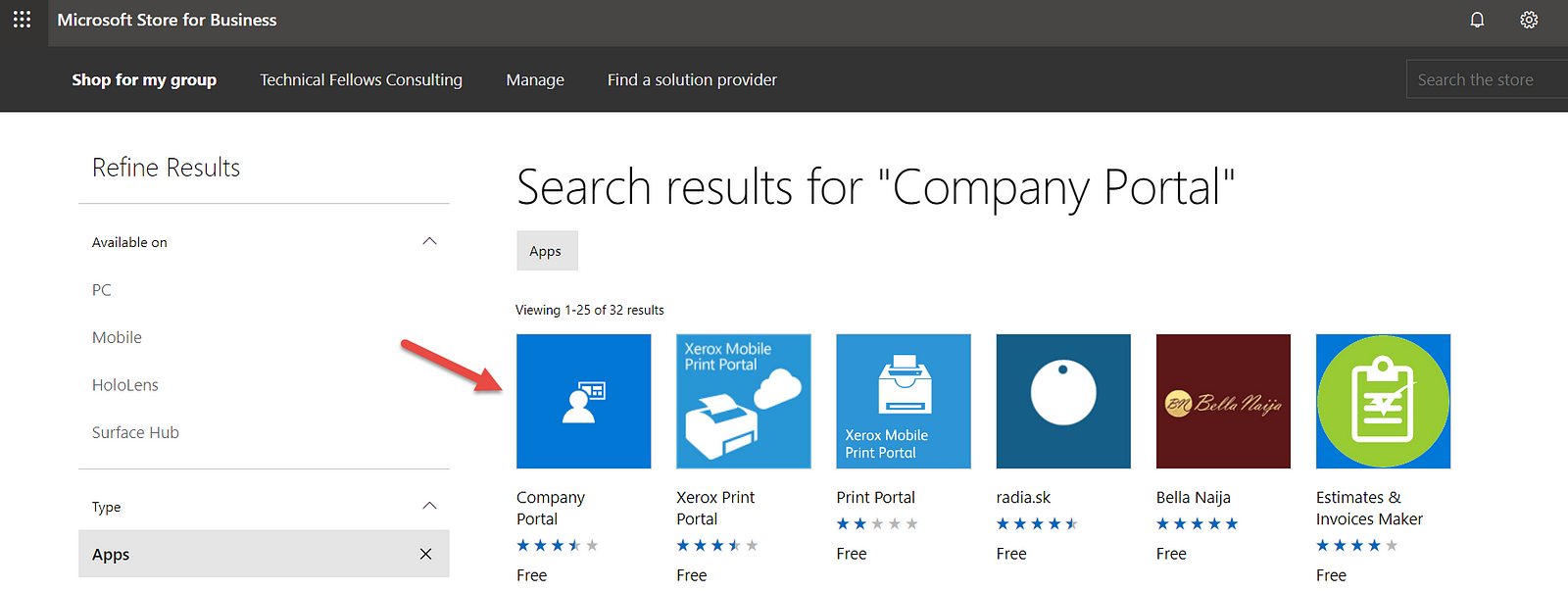
Microsoft Intune – How to remove Microsoft Store for Business app from Client Apps List

Starting the first steps with Microsoft Intune with some try and error on the mix, here’s something I’ve learned about client apps.

When you go to Client Apps, and if you’ve already synced your Microsoft Store for Business with Intune, you’ll see the apps you’ve approved on the store on that list.

But, a strange or…by design thing happens. Imagine you approve an app and the you revoke it. You’ll notice when you manage your Store for Business that the app isn’t there no more but…you still see it in Intune Client Apps list and the option to delete it is greyed out.

Now, to solve this, follow this steps:

  1. Login to the Microsoft Store for Business
  2. Select Manage and then Order History. Here you’ll see all the apps you previously approved.
  3. Now, select the app you want to remove from Intune Client Apps list
  4. On the next screen, in the Action column select Refund and agree with the action
  5. Go back to Intune and then Client Apps
  6. Select Microsoft Store for Business and Sync
  7. Go back to Client Apps list and…the app is gone!

Sunday, July 8, 2018

Removing Tiles from Action Center for All Users

SOFTWARE\Microsoft\Windows\CurrentVersion\ActionCenter\Quick Actions\UnpinnedByDefault
SystemSettings_Connections_Add_VPN

Tuesday, July 25, 2017

Windows – GPOs – Removing IE Maintenance Settings with Windows 2012 R2

Here’s a tip to remove the “infamous” IE Maintenance gpo settings if you don’t have any way to get your hands on a Windows XP machine or simply wanna do it the “geek way” using Windows 2012 R2.

Follow these steps:

  1. Open GPMC
  2. Select your GPO
  3. Now, on the right-side pane select Details tab
  4. Copy, or take note, of the Unique ID
  5. Close GPMC
  6. Open Active Directory Users and Computers console
  7. Make sure Advanced Features is turned on (View > Advanced Features)
  8. Navigate to System | Polices
  9. On the right-side pane, find the Unique ID you took note
  10. Right-click on it and select Properties
  11. Now, select Attribute Editor tab and scroll-down to gPCUserExtensionNames attribute and click Edit
  12. In the dialog box find the following string and delete it (for proper editing copy/paste the entire string from the dialog box to notepad, delete what you need and copy/paste again to the dialog box)
    [{A2E30F80-D7DE-11D2-BBDE-00C04F86AE3B}{FC715823-C5FB-11D1-9EEF-00A0C90347FF}]
  13. Click OK and…you’re done!

Sunday, July 2, 2017

Windows 10 – GPOs – Getting Rid of Consumer Apps

So, you finally got rid of undesired apps that you don’t want on your base/gold image but after that you find your with a bunch of other apps that you don’t know where they came from?

Basically this is a “functionality” on Windows 10 that automatically downloads some consumer apps.

To get rid of these ones follow this steps:

  1. Open GPMC
  2. Edit your GPO
  3. Navigate to Computer Configuration | Administrative Templates | Windows Components| Cloud Content
  4. Double-click “Turn off Microsoft consumer experiences"
  5. Select “Enabled

And you’re done!

Thursday, June 8, 2017

Win 10 – GPOs – Removing Windows Store Icon from Taskbar

207_2

Don’t want the store icon on your users taskbar?

Here’s how to remove it, and don’t allow it to get there again, using group policy.

  • Navigate to User Configuration > Administrative Templates > Start Menu and Taskbar
  • Find and enable the setting “Do not allow pinning Store app to the Taskbar

And you’re done!
Just remember that you need to have the most edit GPOs from a Windows 10 v1703 or you need to install the most recent ADMX templates for Windows 10.

Friday, May 24, 2013

Eliminating Long File Paths from Command Line


I was struggling here trying to delete 2 folders that contained an enormous number of subfolders and I was always getting a "too deep folder" or "file to long" errors.

After some search and testing here's a nice, very nice solution for doing it from command line with Robocopy:


  • Create an empty folder (ex.: D:\Empty)
  • robocopy /purge D:\Empty D:\longfoldername

And it's done! :)